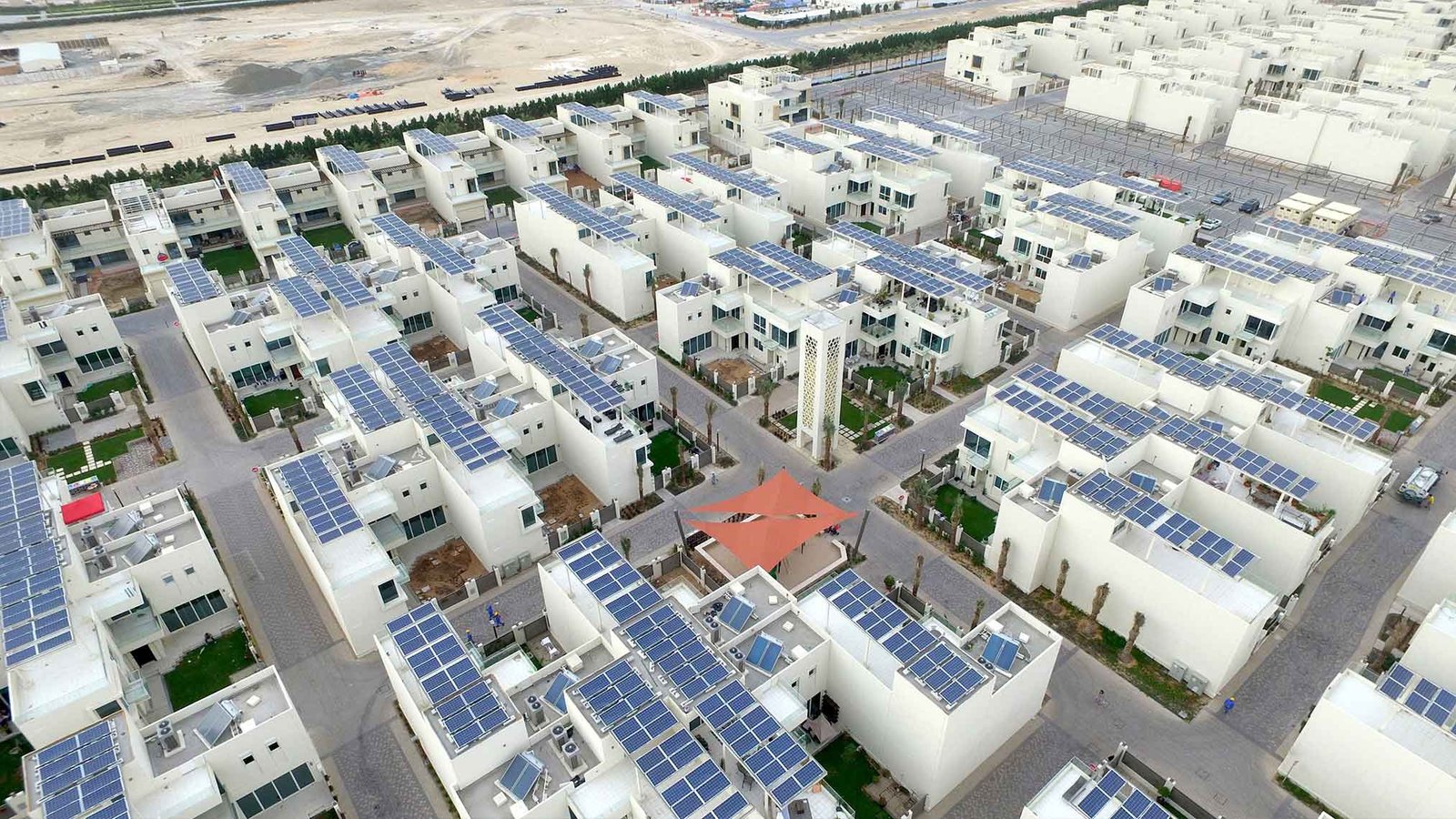
The Sustainable City Solar Villas are a new vision of the ways in which people live, work, and cope with the surrounding environment. These are the centres of the green urban communities that are developed to minimize the environmental degradation, lower the energy expenses, and give its inhabitants a healthy life. The Sustainable City in Dubai and Sharjah Sustainable City are the projects that show that solar energy, urban design, and community development can change the modern lifestyle.
In essence, Sustainable City Solar Villas are residential properties incorporating solar photovoltaic panels to produce clean energy. In a solar-powered community, the first of its kind in Dubai, over 500 villas have a rooftop solar panel to which there is a system that can generate up to 10 megawatts of power at full capacity. This energy will reduce the use of traditional electricity and utility bills will be reduced by the residents.
These villas are designed in such a way that they are energy efficient, durable and comfortable. Home builders are planning on placing houses in areas where the daylight is likely to be so as to include the natural daylight and also minimize the amount of heat that penetrates the house. Electricity is also minimized through high-performance insulation, reflective surfaces, and energy-efficient appliances. The design aspect can reduce the amount of energy consumed by almost half of the conventional villas.
Water Conservation and Waste Recycling
Sustainable City Solar Villas are not only about energy but also a factor that deals with resources that are difficult to obtain such as water. Such communities have high-tech water saving measures which include low flow fixtures, reuse of treated wastewater irrigation, and effective landscaping which minimizes water waste. In other projects, 100 percent will be recycled and reused to provide green areas and will save much on consumption.
Water-saving aspects are also needed in the arid areas where conventional water consumption may put pressure on the water supplies. The communities save more by ensuring that natural resources are preserved by recycling systems and through smart irrigation which encourages responsible living.
The other sustainability pillar is waste management. Composting or processing organic waste is used to make biogas as an alternative to its disposal, transforming a waste issue into a renewable energy source. The waste materials are reused as landscaping materials and community programs being promoted to sort waste materials and make compost as well.
Smart Homes and Technology Integration
The Solar Villas are intelligent both indoors and outdoors. The automation systems of homes allow residents to turn lights and cooling on and off, and appliances on and off remotely. Motion sensors ensure that idle lights are turned off and the temperature in the buildings is adjusted to save additional energy. These technologies make the environment more comfortable and cost less in terms of utility.
Real time energy monitoring is also considered as a smart system. The residents are able to view the amount of solar power generated and utilised on a daily basis. This response promotes the conscious use of energy. Solar storage units are increasing in popularity and a household can store excess power to be used at night or on a sunny day.
Healthy and Active Community Living
The Sustainable City Solar Villas are not just green buildings. They belong to green neighborhoods that have common areas that encourage health and affiliation. The bike paths, jogging tracks, and walking paths are used to keep the residents active and enjoy the outdoor life. The cycles and jogging tracks are over 11.8 kilometers in number in some sustainable communities meant to bond the neighbourhood together and minimize the use of car transport.
Another dimension of sustainability is added to urban farming. Bio-domes and vertical farms are frequently located in central green areas where residents have an opportunity to cultivate vegetables and herbs. Such farms facilitate the production of local food and offer fresh chemical-free food.
The master plan includes infrastructure of electric vehicles. There are also charging stations around the community, which help to own EV and decrease the level of greenhouse gas emissions. Certain communities also have driverless shuttles on special paths connecting houses to essential facilities without polluting the atmosphere.
Economic Benefits for Residents
Finance wise, it may also be prudent to live in a solar villa. The electricity expenses are reduced significantly with solar energy. The intelligent system and efficient energy appliances save on monthly payment. In other instances, research indicates that utility cost is saved as high as 50 percent as compared to conventional houses.
The prices of properties in the green neighborhoods are on the increase. Consumers and tenants are more willing to purchase houses with contemporary comfort and greenery. Governments are pushing to have green building requirements and therefore, the demand of these solar-powered homes is likely to increase.
A Blueprint for Future Cities
Solar Villas are not primarily localized, but Sustainable City Solar Villas. They belong to the international trend of green urban planning. Such communities are a blend of intelligent design, sustainable energy, water and fitness. They demonstrate the way cities of the future can be able to sustain human health and minimise environmental footprints.
The planners of cities in every part of the globe are examining these models in an effort to implement the same ideas in those areas. The issue of sustainable living in urban areas becomes critical as population increases to conserve resources and enhance life standards of millions.